Showing posts with label theology. Show all posts

Wednesday, May 14, 2014

Reflections on Discipleship

I am preparing to teach a course on Evangelism and Discipleship at Guido Bible Institute in Metter, so I have been trying to absorb some "new to me" books on those two topics to help enrich the class lectures. I came across a book by N.T. Wright entitled Following Jesus: Biblical Reflections on Discipleship and soaked it up in about a week. It is essentially a collection of sermons/lectures he has given around this theme. As with anything I have read by Wright I was challenged to expand my understanding of what it means to follow Jesus. I was also encouraged by what God is doing in and through me, as I am shaped on the anvil of Christ. Below are two comments that have really stuck with me.

Let's make no mistake about it; until you learn to live without fear you won't find it easy to follow Jesus. p. 67

The answer to temptation is to find out, perhaps painfully and over a long period, what it is about you that is at the moment out of shape, distorted, in pain. Then one may begin to find out, again often painfully, how it is that God longs to help you to get what is distorted back into focus; to get what is crooked back into shape; to get what is bruised and hurt back into health. p. 88 

Monday, September 23, 2013

Karl Barth's Evangelical Theology

I love to stumble across good books in obscure places like yard sales, thrift stores, etc. Last January I picked up a copy of Karl Barth's Evangelical Theology at a thrift store while Cyd and I were on the church marriage retreat. I finally got around to reading it this month. Of course many consider Barth to have been the most influential theologian of the 20th century for his course correction of Liberal theology, though many conservatives and fundamentals would contend that he didn't go far enough his correctives. I have engaged some of his writing before, but it has been several years since I have read any of his works. This volume was the result of his visit to America and a series of lectures he did at the University of Chicago.

Reading Barth is challenging because his thought process is so thorough that he makes the reader rethink everything before affirming anything. Incidentally, Barth considers this to be one of the necessary components of any theologian. A man who is most remembered for his multi-volume, Church Dogmatics, in discussing the different disciplines of theological study says that systematic theology  is a contradiction in terms. "There is at any rate no justification for the construction and proclamation of a system of Christian truth developed out of some definite conceptualization of it. What should rule in the community is not a concept or a principle, but solely the Word of God attested to in the Scriptures and vivified by the Holy Spirit" (180).

What a challenge for those of us concerned with theology to make sure that our theological systems and structures are not erected as a wall to the movement of the Holy Spirit and the will of God but that they are there as supports to the ongoing work of the Word made flesh!

Monday, September 26, 2011

Evil pt. 2

Most of the quotes in this post from N.T. Wright's book on evil center around what Wright argues is God's ultimate solution to evil, the crucified savior. Wright's own view of understanding the atonement, is the Christus Victor view, that has strong historical roots in such people as Martin Luther and into the modern era of biblical scholarship as Gustaf Aulen.

But when we ask the question, Why did Jesus die? with an eye to the deeper issue of why, in the purposes of God, Jesus might have had to die, we move from historical analysis of events and motivations to a theological account of what God decided to do about evil. That, ultimately, is what theories of "the atonement" are all about. p. 75

The Gospels tell the story of how the evil in the world--political, social, personal, moral, emotional--reached its height, and how God's long-term plan for Israel (and for himself!) finally came to its climax. They tell both of these stories in--and as--the story of how Jesus of Nazareth announced God's kingdom and went to his violent death.  p. 79

We realize with a start that he has been obedient to the Israel-vocation which he had himself announced in the bracing and so often misunderstood Sermon on the Mount. He had turned the other cheek. He had picked up the Roman cross and gone the second mile. He was set up on the hill, unable to be hidden. He was acting as Israel, the light of the world, on behalf of the Israel that had embraced the pagan darkness. p. 85-86

This (the last supper with his disciples) was Jesus' own chosen way of expressing and explaining to his followers, then and ever since, what his death was all about. It wasn't a theory, we note, but an action (a warning to all atonement theorists ever since, and perhaps and indication of why the church has never incorporated a specific defining clause about the atonement in its great creeds). Perhaps, after all, atonement is at its deepest level something that happens, so that to reduce it to a proposition to which one can give mental assent is a mistake at a deep level. p.91

This, the Evangelists are saying to us, is what "the kingdom of God" means: neither "going to heaven when you die" nor "a new way of ordering earthly political reality" but something which includes both but goes way beyond them. p.93

No, all theories of atonement adequate to the task must include both a backward look (seeing the guilt, sin and shame of all previous generations heaped up on the cross) and a forward dimension, the promise that what God accomplished on Calvary will be fully and finally implemented. p. 96

Wednesday, March 23, 2011

St. Patrick's Day and SHS Theater

Last week I had two life experiences that reminded me of the biblical theme of creation, fall, and redemption. We made our annual pilgrimage to Savannah for St. Patrick's Day on Thursday. It's always an opportunity to see family, old friends, and meet new people. We decided this year that we would watch most of the parade from a fixed point with chairs, snacks, etc. It sorta worked out okay. I made my way to the parade route around 8 AM to reserve a spot. We spent the better part of the first 3 hours of the parade watching and enjoying the scenery. The celebratory aspect reminds me that as Christians we have the privilege of celebrating the redemptive work of Christ each day not just on set days and festivals. The life of St. Patrick is a reminder to us as Christians in a post-modern context to meet people where they are with the bold truth of the gospel!

There is ample opportunity for truth to be proclaimed, not with a bullhorn and a sign like one street evangelist I saw, but with a simple, quiet, uncompromising way we can live out the gospel story so that it impacts the lives of the people we come in contact with at a parade, at work, at home, even at church. Among the throngs of people enjoying the festivities one was reminded of the beauty of creation with the majestic oaks and Spanish moss of Savannah, the fall of humanity with the excesses present all around, and the mysterious work of the Holy Spirit to redeem all of creation for the glory of God.

Friday I went to see some of my students present The Lion, The Witch, and The Wardrobe at Statesboro High School. They all did a fantastic job of presenting C.S. Lewis' beloved story that vividly presents the theme of the gospel more clearly than most churches on Sunday morning. It struck as I watched that you had students in the play and people in the audience who would actually miss the whole story that Aslan and his friends enact as creation, fall, and redemption are told in magical ways.

Tuesday, August 31, 2010

A Chosen Debt

My own spiritual journey has been through twists and turns as God has opened my eyes to the broader work of the Church outside of my own local congregation and denomination. Part of my story is my exposure to Reformed Theology at the end of high school and on into college. Although ultimately I didn't choose to stay within those circles (please note the irony) I do owe a great deal to the people I met along the way as well as the influences of that brand of theology own my own, though I do not consider myself to be a part of reformed thinking. This was a great post about the role that reformed theology has played in many people's lives like mine.
http://www.internetmonk.com/archive/my-debt-to-reformed-theology


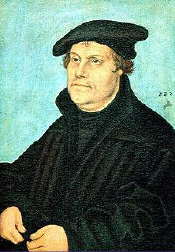
John Calvin, above, shouldn't ever be confused with Calvin (Calvin and Hobbes) below in terms of their importance in shaping popular thought and culture. Both are equally indispensable! In actuality, Calvin and Hobbes is based on John Calvin and Thomas Hobbes.

Friday, August 27, 2010

Ancient-Future

A great post over at Internet Monk about Ancient-Future stream of the post-evangelical world. The more I search, read, think, and reflect the more I am drawn to the thoughts behind Ancient-Future rhetoric. A dear friend told me last night that if he wasn't Baptist, he would be Anglican...a sentiment that I have heard time and time again from others, myself included. Perhaps the biggest need in the church is for a renewed passion for what is good from the history of the faith (Hebrews 12:1-2) as we live out our faithfulness in our own traditions.

http://www.internetmonk.com/archive/dont-misunderstand-the-ancient-future-path

For more on Ancient-Future Faith check out: http://www.ancientfutureworship.com/index.html

Friday, April 30, 2010

Wrightians and the Neo-Reformed: 'All One in Christ Jesus' | Christianity Today | A Magazine of Evangelical Conviction

This was an article that I read after a recent post, http://tonypags.blogspot.com/2010/04/theological-happenings.html about the theological rumblings within conservative, evangelical groups. I thought it made some interesting points. Let me reiterate to anyone who questions my own theology, I have a great appreciation for both John Piper and N. T. Wright, as well as R. C. Sproul and others for all of them have been influential in helping to shape my own understanding of scripture, God, and my wicked heart. However, I am increasingly burdened that the prayer of Jesus in John 17 for all his disciples to be one, seems to be moving backwards rather than forward in realizing that goal.

Wrightians and the Neo-Reformed: 'All One in Christ Jesus' | Christianity Today | A Magazine of Evangelical Conviction

Friday, April 16, 2010

Theological Happenings

Interesting news and debate among folks of the Reformed theological persuasion yesterday at http://blog.beliefnet.com/jesuscreed/2010/04/the-end-of-reformed-old-testam.html. I am not endorsing either side of the debate, but I will say that both of these men are well-respected scholars and men of faith. Not sure I totally agree with McKnight's closing remarks...partly because it seems that everyone you ask has a different definition of what it means to be an "evangelical" a la Rob Bell's recent definition of the topic.

The more intriguing thing to me is the swelling tide of what I consider Neo-Reformed people who I believe will eventually draw the circle so small that there may not be any hope for even the elect:)

Wednesday, December 9, 2009

The Manhattan Declaration

I'm usually not one of those Christians who waves the battle flag for issues like abortion, the biblical definition of marriage, etc., not because I don't believe in those things...it just seems that too often Evangelical Christians are too busy waving those banners rather than the banner of Jesus. It's a fine line to be sure, but it seems to me that the more important thing for me to do is to tell them about Jesus and how he can change their life rather than championing causes or fighting over morality, which cannot be legislated I might add, as hard as some Christians try to do that. In reality what the world needs is a group of believers who are so consumed with God that it radiates out of their lives and instead of defending our issues we can live subversively to impact culture and people for the sake of the Gospel!

HOWEVER, as I read through the Manhattan Declaration: A Call of Christian Conscience, I found the language, the tone, and the issues it addressed almost exactly what I would have said and written. It is worthy document for Christians of all persuasions to sign and support because it unifies us as the Body of Christ, the Church universal, to boldly stand for the cause of the widow, the orphan, the forgotten, and the down-trodden of our society...there seems to be several of each category in America...sadly the church has either been too loud in condemning culture to rescue the widows and orphans or too focused on gospel presentations and altar calls to make much of a difference for anyone or anything, especially God. The Manhattan Declaration is call for believers to put faith into action, I'm prayerful that it will happen.

Sunday, November 8, 2009

Ecumenical Evangelical

One of my core values in ministry and in my personal theology is a commitment to ecumenism. Not the everyone's going to heaven regardless of what you say, do, or believe, but a genuine respect and willingness to work together with brothers and sisters in Christ who are a part of other Christian traditions than my own. I saw this post at Internet Monk that reminded me that even though some are drawing the circle tighter and tighter, that many are willing to find commonality in "one faith, one Lord, and one baptism.

Friday, October 30, 2009

Reformation Heritage and Ecumenism for 2009


I have posted here before about my convictions in a broad circle of ecumenism among the body of Christ. I strongly admire the work of groups and individuals like Evangelicals and Catholics Together, Timothy George, Chuck Colson, and others. I saw this article this morning. I thought it fitting since tomorrow is Reformation Day for many, many protestants, particularly of the Reformed and/or Lutheran heritage. There are differences between Protestants and Catholics, let's be clear about that fact, but there is more that unites us than divides us. That being said I am alarmed at this article and what is going on within subgroups of the church among minor differences and distinctives. (I acknowledge that most of those who would have issues over these "minor" differences actually argue that these are major differences of doctrine, you can be the judge of that.) I really liked what Timothy George had to say in the article:

"The gaping divide between evangelicals and Catholics is ecclesiology and authority, not justification and salvation, as important as that debate remains," George said. "There is enough commonality that evangelicals and Catholics with a living faith can recognize one another as brothers and sisters in Jesus Christ with a common Lord and common grace that brought them together. The hard issues are questions related to the church, such as the Petrine office [the papacy] and the Eucharist. Those discussions will occupy us for the next 100 years."


Conscience will not let me dismiss my Roman Catholic brothers and sisters, but I am thoroughly Protestant. I am ever grateful for the work of Martin Luther, John Calvin, Zwingli, and others who realized that the core values of the reformation really were important enough to fight for. It is Luther's work that allows us to read the Bible in our native tongues all over the world. It is Calvin's renewal of systematic and organized theology that has influence every one who has attempted to do theology since then. This Reformation weekend I will be grateful to God for working throughout the years, from Christ to Augustine to Benedict to Aquinas to Luther to William Carey to Billy Graham to ????.

Tuesday, September 1, 2009

Justification

N.T. Wright offers a sweeping review of the controversy surrounding him concerning the doctrine of justification in his latest book published by IVP Academic. Wright's book is in response to many of his critics including John Piper and D.A. Carson, but it is much more than an experiment in self-defense. Wright succinctly presents his own understanding of justification, arguing that his definition is more true to the Pauline writings of the New Testament. I will admit that my knowledge on this debate is limited, but one would be hard pressed to argue that Wright has varied from Christian orthodoxy. What he has done is to "out-Reform the neo-Reformed" as Scot McKnight phrased it. He has pushed those who consider themselves Reformed and anyone else who is a Christ follower to dive deep into Scripture and allow it to be our framework for theology rather than our specific theological systems and beliefs being imposed on Scripture.

I was blown away by the power of such an immanent scholar to approach this subject with the skilled hand of a surgeon as over half of the book is simply exegesis of major portions of the Pauline corpus. At the core of Wright's motivation is a pastoral desire for his own congregation and all who call Jesus Lord to allow scripture to dictate our beliefs and lives.

I will share a couple of favorite quotes: one serious and one light-hearted. I hope to share more in the days ahead, so many of them are lengthy excerpts as opposed to one-liners.

We must read scripture in its own way and through its own lenses, instead of imposing on it a framework of doctrine, however pastorally helpful it may appear, which is derived from somewhere else. There are many things which are pastorally helpful in the short or medium term which are not in fact grounded on the deepest possible reading of Scripture. That is simply a testimony to the grace of God: we don't have to get everything right before anything can work! But if the church is to be built up and nurtured in Scripture it must be semper reformanda, submitting all its traditions to the Word of God. And when we bring the doctrine of "imputed righteousness" to Paul, we find that he achieves what that doctrine wants to achieve, but by a radically different route. In fact, he achieves more. To know that one has died and been raised is far, far more pastorally significant than to know that one has, vicariously, fulfilled the Torah.

From Romans 6 we leap straight into Romans 8. For a lifelong exegete to skip over Romans 7 is like a thirsty Irishman ignoring a pint of Guinness.

Both of the quotes above are from page 233. I think they capture the warmth of Wright's writing while at the same time communicating the implications that one's understanding of justification has for living the Christian life.

Friday, July 3, 2009

Theological Musings

Although reading theology can be a challenge for me, I must confess that sometimes academic theologians are just too brilliant for my finite brain, I still try to plow my way through theology books from time to time to stretch my understanding of the movement of God in our world. I recently finished A Black Theology of Liberation by James H. Cone that was an influential book within academic theology in last 40 years. Much of Cone's discussion of theology is so tied to the plight of African-Americans in the 1960s that I feel it is irrelevant today, although he would argue that that is because I see things from the perspective of white theology which is lumped with the oppression of other groups particularly African-Americans. Still it was an interesting read. Cone's work and others like him is rooted in an attempt to contextualized the changeless message of the gospel, which is what missionaries to foreign countries do. I do not agree with much of Cone's final analysis, but there was one statement that really stuck out to me. "It is the function of theology to analyze the changeless gospel in such a way that it can be related to changing situations" (202). The message of the cross hasn't changed in 2,000 years, but the methods for communicating the gospel certainly have. I might add in light of the discussions going on within the Southern Baptist Convention recently that the methods for supporting, funding, and promoting the work of communicating the gospel sometimes need to be changed too. The cross and the savior have NOT changed but the culture in which we find ourselves in America, Africa, Asia, etc. is not the same as it was 100 years ago or even 5 years ago. If the universal church is going to continue to make an impact for the sake of the Kingdom, then we must realize that the context of doing ministry and proclaiming the gospel has shifted. We cannot continue to do things the way we have always done them and think that we are being faithful to the Great Commission. Perhaps James Cone could see that in ways that many Christians cannot...


Their is a growing debate within Evangelicalism about Paul's teaching of Justification. The two key players are N.T. Wright and John Piper. I am awaiting my copy of N.T. Wright's book on the subject, so hopefully I will be able to share some insights from it later this summer. If you aren't familiar with the debate you can go to Christianity Today's website and see several articles about it. The little bit of reading I have done on the subject leads me to believe that the biggest difference is the starting point for Piper of viewing the death of Christ. Piper is an evangelical who clings unashamedly to the Penal Substitutionary view of the atonement. There is nothing wrong with that view, it is definitely a biblical view, but a surface reading of scripture presents other models or ways that the New Testament writers understood and spoke about the death of Christ. I'm not sure that Wright takes any one position himself. For Piper, everything we understand about the Gospel is rooted in the penal substitutionary death of Christ. I for one cannot deny that that is a view of the New Testament and certainly of the 16th century Reformers, but to speak of Christ's death in only those terms I cannot do and still consider myself being faithful to the complete witness of the New Testament.

Wednesday, May 27, 2009

The Atonement

I respect Phillip Yancey and his thoughts on just about anything. When I saw this recent article from Christianity Today I was intrigued. Yancey has such a way of putting things together in ways that summarize but don't reduce theology down to a skeleton of its former self. Here is the link http://www.christianitytoday.com/ct/2009/may/32.72.html

Thursday, March 26, 2009

What Does the Cross mean to You?

I actually scribbled this down in one of my notebooks a few weeks ago as I was preparing to preach on the sayings of Christ from the cross and leading the Lord's Supper service this coming Sunday, but it has been a little crazy so I haven't had a chance to get it posted till now.

I read something today that asked the question "What comes to your mind when you hear the word cross?" I immediately thought of several song lyrics. "Girl with crimson nails, Jesus round her neck" (U2). "It's not my cross to bear" (Allman Brothers). "Yeah, you cross yourself those three times and step into this skin" (Bill Mallonee). "The Southern Cross" (Crosby, Stills, and Nash).

What does the cross really mean to me? Is it a theological explanation for a major world religion? Is it a piece of jewelry? Is it a metaphor for a burden or a difficult task? Is it a sign of blessing and peace? Is it an empty piece of wood that bore the mangled body of the savior? For me the cross is that symbol that reminds me of the love of God. It is the length to which a loving God went to redeem a stubborn, rebellious sinner like me. The cross has the power to humble me when I become prideful, cheer me when I become downcast, and boost my hope that God's love is bigger than my sin.

Wednesday, March 11, 2009

Is Evangelicalism Dying?

I've been looking at some different blogs with evangelicalism the last few weeks and I am completely amazed at the diversity of people under the banner, Evangelical. I have a growing suspicion that Evangelicalism as the movement we have known for several decades is waning, but I'm not sure it will ever die out completely. I found this blog by one of the editors of Christianity Today to be very interesting. http://www.christianitytoday.com/ct/2009/marchweb-only/110-31.0.html?start=1

Monday, September 22, 2008

Living Unloved

I have been reading, experiencing, and contemplating numerous things in the last few weeks all with good intentions of sharing some thoughts here, but time hasn't been my friend lately. I have found myself using the few extra moments to soak up time with Claire and Charlotte, which is definitely a good thing. Perhaps this week I will have some time to catch up on my blogging. I did want to share one story that I read in e-mail preaching journal sent out by Walter B. Shurden, Minister at Large, Mercer University. Buddy Shurden was the chair of the Christianity department when Cyd and I were at Mercer. He holds a special place in our hearts as a teacher, a mentor, a pastor of sorts, and a friend. The following is actually his response to a section of The Shack. His thoughts on living unloved spoke to me when I opened the e-mail last week. I have already used a variation of it twice in preaching and teaching, it's that good!

Years ago when I was a very young pastor, I encountered a college student who had been sent my way “for counseling” by a member of my church who was also the dean of students at the local university. I know of no other way to describe the college student: she was a wreck of a human being.

For an hour I made absolutely no access to her soul. But as she grabbed the door handle to leave, I said, “Let me ask you one more question.” “Shoot,” she arrogantly shot back. In as pastoral a way as I knew how, I quietly asked, “Who loves you?” “That’s a stupid damn question,” she countered; “Why do you ask?” “Because,” I said, “My business is to tell people that they are loved.” I pressed the issue: “So tell me who loves you.” Long, long pause with obvious pain and then sadly: “My brother . . . maybe.”

When we live unloved lives we end up overreaching like Adam, lying like Eve, manipulating like Jacob, being fearful like Saul, living unbuttoned like David, amassing like Solomon, denying like Peter, boasting like Paul, and killing ourselves like Judas. Living unloved, we end up puking in alleys, bed-hopping, living self-destructive lives, buying till it hurts, climbing ladders made of others’ heads, building barns too big to live in, confusing ambition with vocation, hoarding rather than sharing, hating folk who don’t look like us, driving by Lazarus, and using rather than serving people. To tell the truth, we end up on trash heaps on the southwest corner of Jerusalem. They called it Gehenna. We call it Hell! We end up as waste, and we waste the only life given to us. That is hell: waste.

But here is the Good News: God is for you! God loves you! You don’t have to live your life hating yourself! To believe all of that is much harder for most people to believe than doctrines of the virgin birth, the deity of Christ, etc. God welcomes you! God accepts you! And Fred Craddock closed his sermon on this theme with: “Can you BELIEVE THAT?”

Powerful thoughts indeed!

Friday, September 12, 2008

Thoughts on God

The prophet Hosea provides a challenging look at faith. Some scholars believe Hosea's marriage to Gomer is purely metaphorical, representing the waywardness of Israel and their affairs with other God's particularly Baal. What strikes me most is not a matter of interpretation in terms of historical event or hyperbole but the ever-true message of God's faithfulness in the midst of our unfaithfulness.

Hosea 13:4-6 (The Message)

4-6"I'm still your God,
the God who saved you out of Egypt.
I'm the only real God you've ever known.
I'm the one and only God who delivers.
I took care of you during the wilderness hard times,
those years when you had nothing.
I took care of you, took care of all your needs,
gave you everything you needed.
You were spoiled. You thought you didn't need me.
You forgot me.

God proves himself true over and over again as he demonstrates his faithfulness in our lives daily. We take for granted the little things, like breathing each morning when we awake, even if the wake-up call is because of aching muscles, alarm clocks, or an energetic 3 year old. What about food to eat each day. Or perhaps an encouraging word from a friend or a smile from a stranger as you pass them in the grocery store. God is faithful to provide for us and meet us right where we are.

Hosea 14:4-5 (The Message)

4-8 "I will heal their waywardness.
I will love them lavishly. My anger is played out.
I will make a fresh start with Israel.
He'll burst into bloom like a crocus in the spring.
He'll put down deep oak tree roots,
he'll become a forest of oaks!
He'll become splendid—like a giant sequoia,
his fragrance like a grove of cedars!
Those who live near him will be blessed by him,
be blessed and prosper like golden grain.
Everyone will be talking about them,
spreading their fame as the vintage children of God.
Ephraim is finished with gods that are no-gods.
From now on I'm the one who answers and satisfies him.
I am like a luxuriant fruit tree.
Everything you need is to be found in me."

There is this print my mom has in her house of a historic oak tree in Savannah. The oak has this huge sprawling canopy of branches complete with Spanish moss hanging from the limbs. The beauty and grace of the Majestic Oak above ground is only made possible by the deep roots beneath the surface. Roots that run long and deep down in the fertile soil of the Georgia coastline. That root system serves at least 2 purposes. 1) It provides the groundwork for the beautiful vegetation of the tree and 2) a strong support system so that the tree isn't toppled by winds and rain and other potentially dangerous elements. Isn't it great to know that God provides the strong support system we need to face each day of life! He is our protector, our shield, our defender....He is our REFUGE!!